
Start a project
Menu

Integrations & APIs

Commerce integrations with clear data ownership and traceable flows.

We design interfaces so it is clear which system owns each type of data, how updates move, what happens when a request fails and how operations can be monitored.

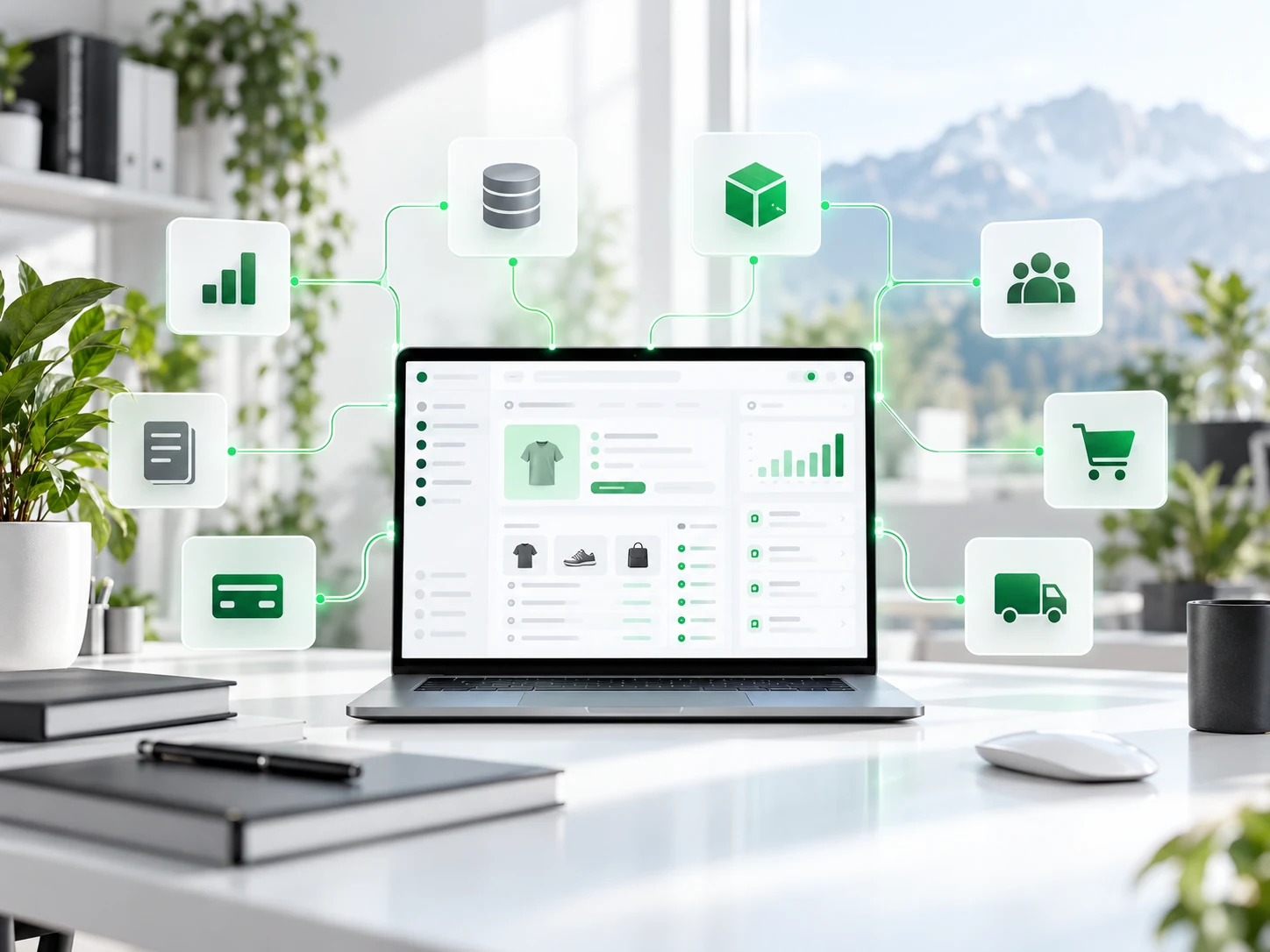
commerce integration diagram connecting shop, ERP, PIM, CRM, payment and shipping systems
01Source of truth defined
02APIs and fallbacks documented
03Errors made visible
04Business processes tested

Typical starting points

Why integrations become fragile

Most integration problems are not caused by APIs alone. They arise when data ownership, timing and failure handling are unclear.

  • Product data is maintained in several systems
  • Prices or stock levels are inconsistent
  • Orders require manual transfer or correction
  • Failures are only noticed after customers are affected

Deliverables

What we design and implement

  • Data ownership and integration architecture
  • API, webhook, import or export workflows
  • Mapping, validation and error handling
  • Logging, monitoring and operational documentation

Use cases

Typical systems we connect

The right integration pattern depends on volume, latency, API capabilities and how critical the process is.

01

ERP and inventory systems

02

PIM and product data platforms

03

CRM and customer systems

04

Payment, shipping, marketplaces and specialist APIs

Decision criteria

Which system should lead each process?

Before implementation we define a source of truth for products, prices, stock, customers and orders. Without that, integrations tend to create duplicate logic.

Questions we clarify early

  • Which system owns each business object?
  • How current must data be?
  • What volume and peak load must be handled?
  • How are retries, duplicates and partial failures managed?

Quality & control

Reliable integrations are designed for failure.

External systems can be slow, unavailable or return invalid data. Production quality requires deliberate handling of those states.

  1. 01

    Make operations idempotent where possible

  2. 02

    Validate payloads and mapping rules

  3. 03

    Log errors with enough context for support

  4. 04

    Test timeouts, retries and duplicate events

How we work

From target state to reliable implementation.

The emphasis of each step depends on the project. The goal is to expose risks early and make technical decisions transparent.

01

Discovery & target state

We clarify requirements, data, users, operating responsibilities and technical dependencies.

02

Concept & architecture

We define page structure, system boundaries, integrations and the quality criteria that matter for the project.

03

Implementation & testing

The solution is built iteratively and tested with realistic content, data and business processes.

04

Launch & improvement

We prepare go-live, monitoring, documentation and the next sensible development steps.

Frequently asked questions

Key questions about Integrations & APIs.

Direct answers to questions that often matter before a decision or implementation.

Can you connect our ERP or PIM to any shop system?

If both sides provide suitable APIs, webhooks or reliable import/export mechanisms, integration is usually possible. The effort depends on the data model, volume and business rules.

Do integrations have to be real-time?

No. Real-time is useful only where the process requires it. For many product or reporting workflows scheduled synchronization is simpler and more robust.

How do you prevent duplicate orders or updates?

We design identifiers, idempotency rules, event handling and logging so repeated requests can be detected or processed safely.

Project start

Planning a new shop, migration or targeted optimization?

Briefly describe the current setup, your goal and existing systems. We can then structure the most sensible next steps without forcing a platform decision too early.