
Start a project
Menu

SEO & GEO

Make your shop understandable to search engines and answer systems.

We combine technical SEO with clear information architecture, structured data and answer-ready content so important products, categories and guides can be discovered and interpreted reliably.

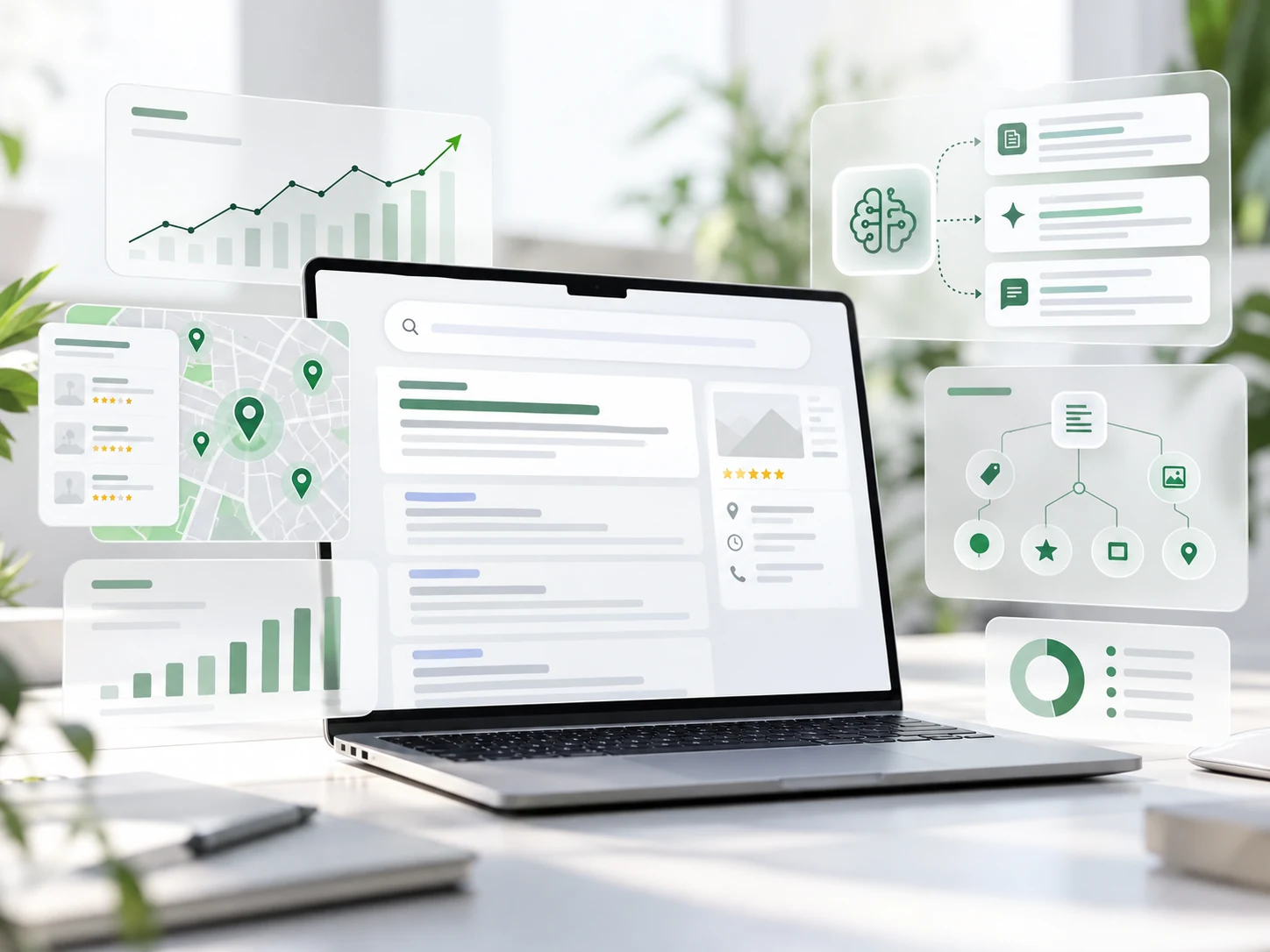
SEO analytics workspace showing search visibility, structured data and commerce content
01Crawlability first
02Intent-led page architecture
03Structured data that matches content
04No ranking guarantees

Typical starting points

Where shop visibility commonly breaks down

A technically functional shop can still be difficult for search systems to understand when URLs, templates, internal links or content signals are inconsistent.

  • Important pages are poorly linked or duplicated
  • Filters and variants create unnecessary crawl paths
  • Structured data is incomplete or does not reflect visible content
  • Content is too vague for search intent or modern answer systems

Deliverables

What we improve

  • Crawl, indexation and canonical structure
  • Titles, headings and page intent
  • Structured data and entity clarity
  • Internal linking, content architecture and answer-engine readability

Use cases

Typical SEO/GEO work for e-commerce

The exact work depends on whether the priority is a relaunch, category visibility, content growth or technical cleanup.

01

Technical SEO audits for existing shops

02

SEO-safe relaunches and migrations

03

Category and product information architecture

04

Knowledge content for search and answer systems

Decision criteria

Which pages deserve to be indexable?

More indexable URLs are not automatically better. We distinguish pages with a clear search purpose from thin, duplicate or transactional states.

Questions we clarify early

  • Does the page satisfy a distinct search intent?
  • Is the content unique and useful enough to index?
  • Can users and crawlers reach it through real links?
  • Do canonical, pagination and filter rules match the intended indexation?

Quality & control

SEO/GEO quality is more than metadata.

Titles and schema only work when content, crawlability, performance and trust signals support the same story.

  1. 01

    Validate HTML, canonicals and structured data

  2. 02

    Review rendered mobile and desktop pages

  3. 03

    Keep claims specific and verifiable

  4. 04

    Measure indexation, queries and Core Web Vitals after launch

How we work

From target state to reliable implementation.

The emphasis of each step depends on the project. The goal is to expose risks early and make technical decisions transparent.

01

Discovery & target state

We clarify requirements, data, users, operating responsibilities and technical dependencies.

02

Concept & architecture

We define page structure, system boundaries, integrations and the quality criteria that matter for the project.

03

Implementation & testing

The solution is built iteratively and tested with realistic content, data and business processes.

04

Launch & improvement

We prepare go-live, monitoring, documentation and the next sensible development steps.

Frequently asked questions

Key questions about SEO & GEO.

Direct answers to questions that often matter before a decision or implementation.

What does GEO mean for an online shop?

Here GEO means structuring content and entities so modern search and answer systems can identify the company, services, products and supporting facts. It complements rather than replaces conventional SEO.

Does a machine-readable site summary improve Google rankings?

No ranking effect should be assumed from auxiliary machine-readable files. Indexable HTML, the sitemap, internal links, canonicals and structured data remain the core.

Can you guarantee rankings or answer-engine citations?

No. Rankings and citations depend on external systems and competition. We can improve technical quality, content clarity and crawlability, but cannot guarantee a specific position or citation.

Project start

Planning a new shop, migration or targeted optimization?

Briefly describe the current setup, your goal and existing systems. We can then structure the most sensible next steps without forcing a platform decision too early.